
How to File an Allen County Public Records Request
The first question is which office holds the record. Court records go through the Clerk. Sheriff and jail records go through the Sheriff's Records Division, which uses an online request portal. Other county records go through the office that keeps them. Once you know the holder, the request itself is simple.
A clear request gets a faster answer. Be specific about the document, the people involved, and the time frame.
- Identify which office keeps the record you want.
- Use that office's request form, portal, email, or mail address.
- Describe the record, the parties, and a date range.
- Add a case or incident number if you have one.
- Pay any copy or certification fee before the office releases the record.
For court documents specifically, the Allen County court records page and the Clerk of Court page cover the copy process.
Sending a request to the wrong office is the most common delay. The Clerk cannot release a Sheriff incident report, and the Sheriff cannot certify a court file. If you are unsure, a quick call to either office will point you to the right place before you spend time on a form. Both the Clerk and the Sheriff publish the contact details and the exact intake method they prefer.
Indiana's Access to Public Records Act
The law behind these requests is the Access to Public Records Act, Indiana Code § 5-14-3. Its policy favors full and complete information about government, and it puts the burden to justify withholding on the agency. The act is meant to be read in favor of access, so a public record is open unless a specific exemption applies.
Court records add a second layer. The Indiana Supreme Court's Rules on Access to Court Records govern court files, and they say records are public unless excluded. Together these set the framework for nearly every Allen County records request.
Note: Under Indiana law you do not have to explain why you want a public record, though an office needs your contact details to respond and bill copies.
What Records the County Keeps
Different offices hold different files. The Clerk administers court records, the judgment docket, marriage licenses, and child-support processing. The Sheriff holds jail, warrant, and incident records. Knowing the split saves a misdirected request.
- Court case files, dockets, and judgments, through the Clerk.
- Marriage license records, through the Clerk.
- Jail roster, booking, and warrant records, through the Sheriff.
- Criminal records checks, through the Sheriff Bureau of Identification.
- Incident and investigation records, through the Sheriff Records Division.
The inmate records and warrant records pages go deeper on the Sheriff side. Beyond these, the county recorder, assessor, and health offices keep deeds, property data, and vital records, each with its own request process separate from the courts.
Sheriff Records Requests
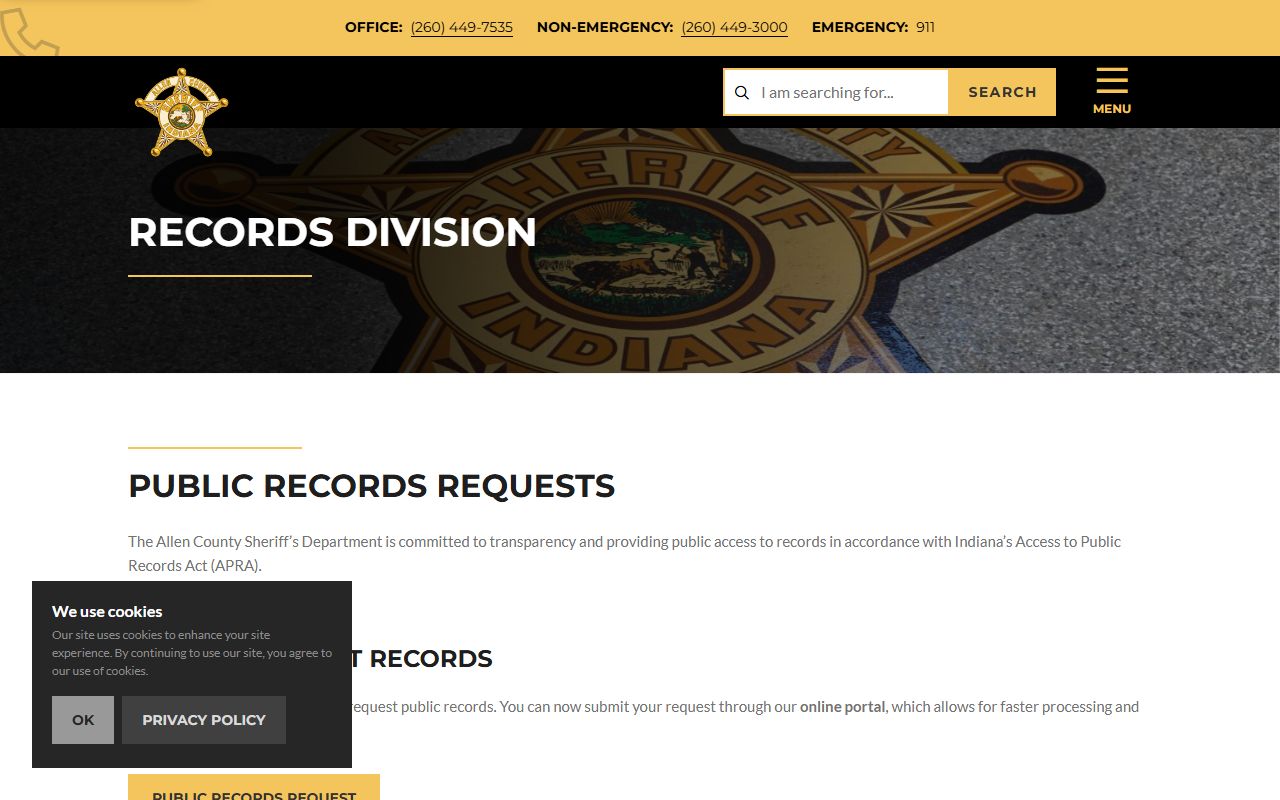
The Sheriff's Records Division moved its intake online. It provides public access in line with Indiana's records law and uses a public-records request portal for faster processing and tracking. The division lists the details you should include and the kinds of requests that may be delayed or denied.
The image below shows the Sheriff Records Division page.
This screenshot is from the Sheriff Records Division page.
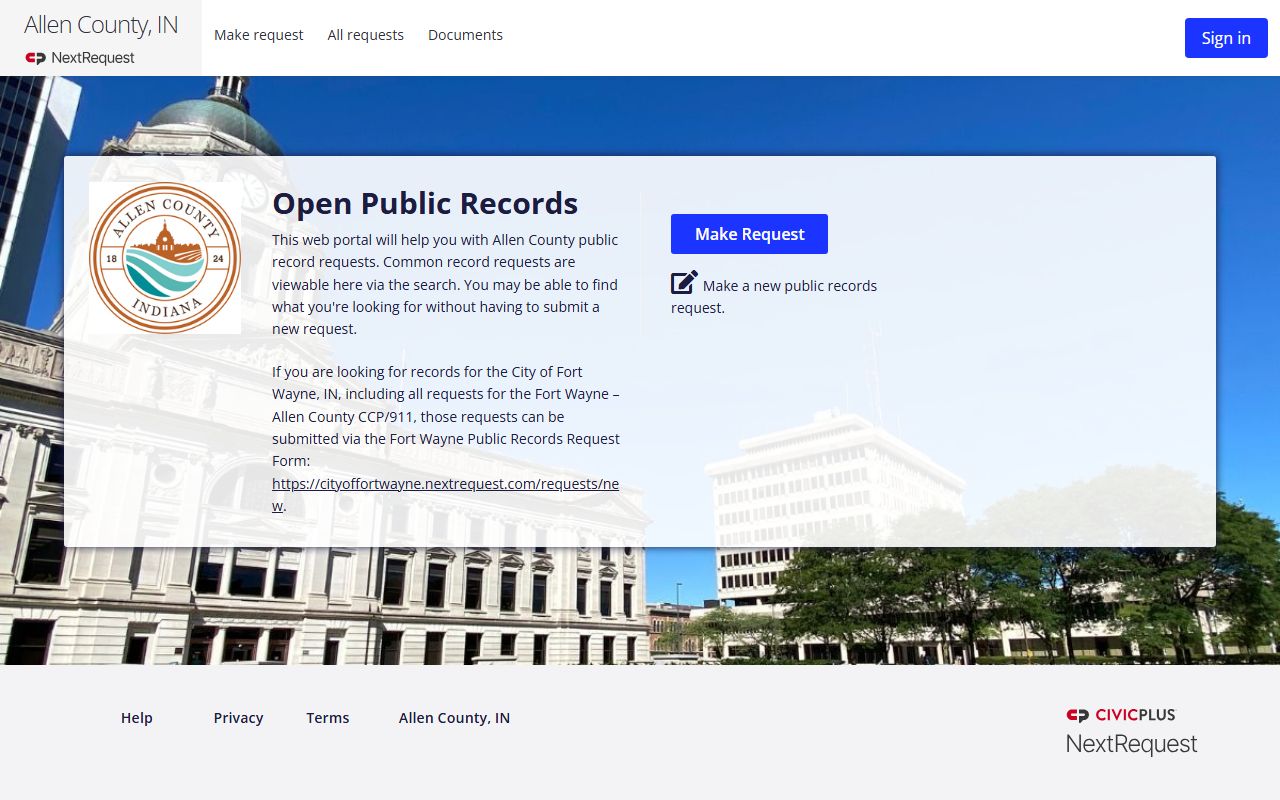
The portal itself is where you submit the request. The image below shows that online request system.
This screenshot is from the Sheriff's online records request portal.
Vague, overly broad, non-Sheriff, confidential, or exempt requests may be slowed or turned down, so aim for a tight, specific ask.
Request Form Fields
Most county records requests ask for the same core details. Providing them up front avoids a back-and-forth that delays the record. The table below lists what a typical request expects.
| Field | Required | Notes |
|---|---|---|
| Requester name | Yes | Needed to process and respond. |
| Contact information | Yes | Email, phone, or mailing address. |
| Description of the record | Yes | Identify the document or case clearly. |
| Party names | Where known | Names of the people involved. |
| Case or incident number | Recommended | Speeds retrieval if known. |
| Date range | Optional | Helps narrow the search. |
| Certified copy | Optional | Required for legal or official use. |
For a mailed Clerk request, include payment and a stamped return envelope.
Fees for Allen County Public Records
Inspecting a record is free. Copies are not. The Clerk charges per page, with an added certification fee for certified documents. The Sheriff charges a set fee for a criminal records check. The table below lists the common amounts.
| Item | Amount |
|---|---|
| Plain copy, per page | $1.00 |
| Certification, per document | $3.00 plus the page fee |
| Sheriff criminal records check | $15.00 |
Indiana law also lets agencies charge for copying and search under IC 5-14-3-8, so ask about the cost of a large request before it is processed.
Exemptions and Confidential Records
Open access has limits. The Sheriff lists records that are exempt or may be withheld, including active or ongoing criminal investigations, juvenile records, protected personal information, confidential informant data, and records that would endanger public safety. Court rules add their own exclusions for sealed, expunged, and confidential files.
Specific statutes close certain categories. Juvenile records fall under IC 31-39, adoption records under IC 31-19-19, and sealed or expunged criminal records under IC 35-38-9. The arrest records page covers sealing and expungement in detail. An exemption does not always block an entire file. Often an office releases the public parts and redacts the protected fields, such as Social Security numbers, protected addresses, or details about a minor.
Response Times and Follow-Up
A request is not instant. Offices need time to find, review, and copy a record, and older or non-automated files take longer. If a request is denied, the agency must justify withholding under the law. You can narrow a broad request or ask which exemption applies.
For court records that are not online, the Clerk's Records Management Division and Central Services handle retrieval and copies, as the Clerk of Court page explains.
Patience helps with the oldest material. Allen County keeps records dating back to 1824, and pulling a file from that far back can mean searching general indexes by hand. Recent electronic records come quickly, while a century-old document may take staff time to locate. Setting a realistic time frame, and giving the office a clear description, gives any public records request its best chance of a fast and complete answer.